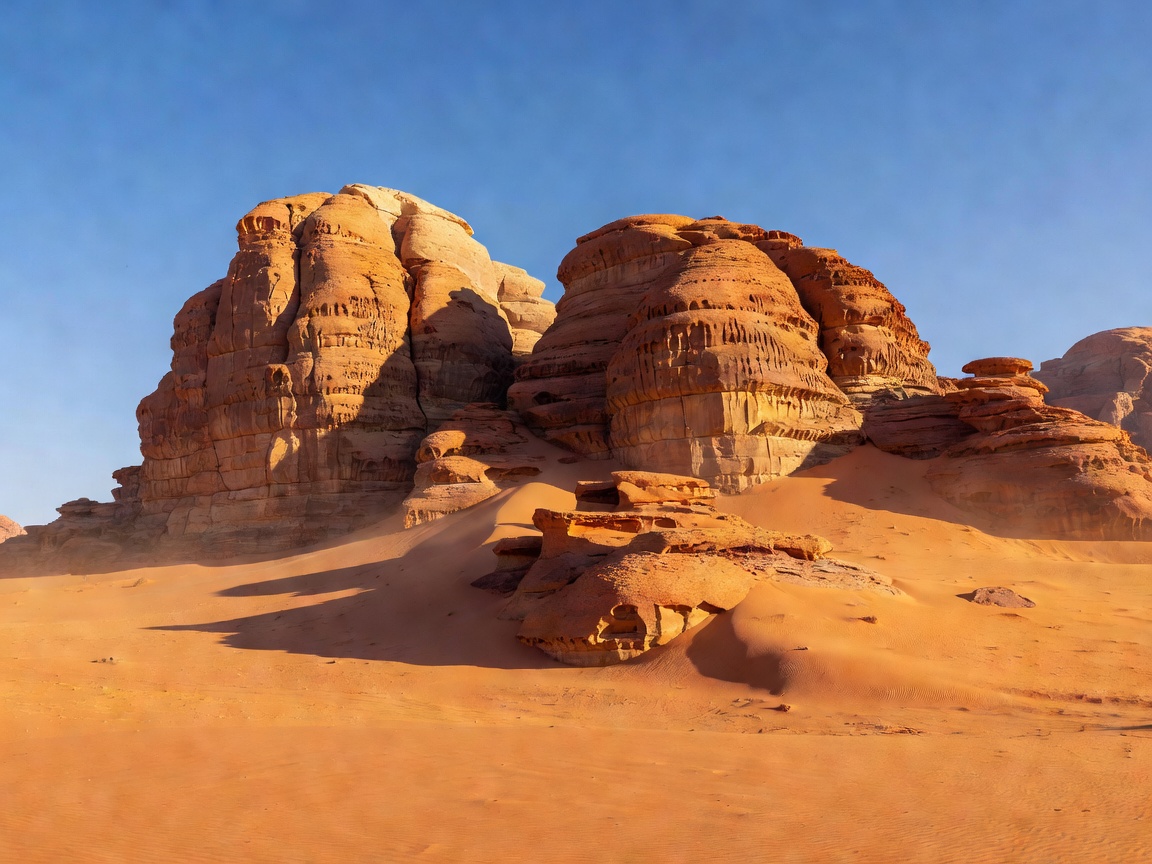
The Definitive Martian Landscape
Designated as both a UNESCO World Heritage natural and cultural property, Wadi Rum covers 720 square kilometers of sheer granite and sandstone monoliths rising dramatically from broad ochre-colored valleys. Known poetically as the "Valley of the Moon," its singular geological makeup—iron oxide rich quartz sands and erosion-sculpted rock arches—has made it the premiere earthly location for extraterrestrial cinematography.
Denis Villeneuve's Dune: Arrakis Realized
Director Denis Villeneuve chose Wadi Rum and the neighboring military border regions of Jordan to establish the physical reality of the desert planet Arrakis in both Dune: Part One (2021) and Dune: Part Two (2024). Cinematographer Greig Fraser utilised the unique reflective properties of Wadi Rum’s white and red dunes during the golden hour to minimize synthetic CGI backgrounds.
The production established tactical basecamps in the valley, employing Bedouin logistics coordinators who understand the shifting wind currents and deep-sand navigation necessary to protect Panavision digital cinema equipment from intrusive quartz dust.
Key Film Landmarks in the Valley
- Jebel Rum & Um Ishrin: Towering 1,754-meter massifs that provided the backdrops for Paul Atreides' and Lady Jessica’s flight across the open sand basins.
- Burdah Rock Bridge: One of the world's highest natural arches, featured extensively in adventure cinema and historical epics.
- The Seven Pillars of Wisdom: The imposing rock formation named in honor of T.E. Lawrence, immortalized in David Lean's 1962 multi-Oscar masterpiece.
- The Martian Hab Site: The red sand basin where Ridley Scott constructed the Ares III habitat station for Matt Damon's stranded astronaut mark.
Field Logistics & Travel Specifications
| Geographic Location | Wadi Rum Protected Area, Southern Jordan (60 km east of Aqaba) |
|---|---|
| Access Protocol | Registered Bedouin guide and 4x4 transport required past the visitor center |
| Best Season | March to May & September to November (Summer temperatures exceed 42°C) |
| Protection Entity | Aqaba Special Economic Zone Authority (ASEZA) & UNESCO |
Official Tourism Resource
Jordan Tourism Board & Royal Film Commission
Gain authenticated access details for protected reserves and support services managed by the Royal Film Commission of Jordan.
Explore Official Visit Jordan Portal →